
‘I will shout loud until something changes’: Long-time Macmillan volunteer reflects on personal experience of Scotland’s cancer care
A routine mammogram led one Larbert resident to strengthen her passion for improving cancer care in Scotland after experiencing the system first-hand.
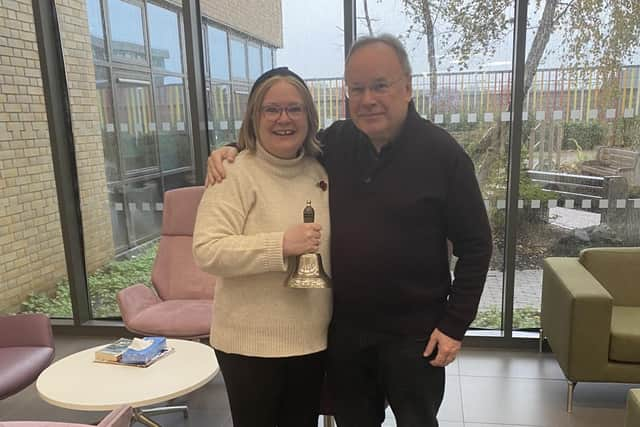
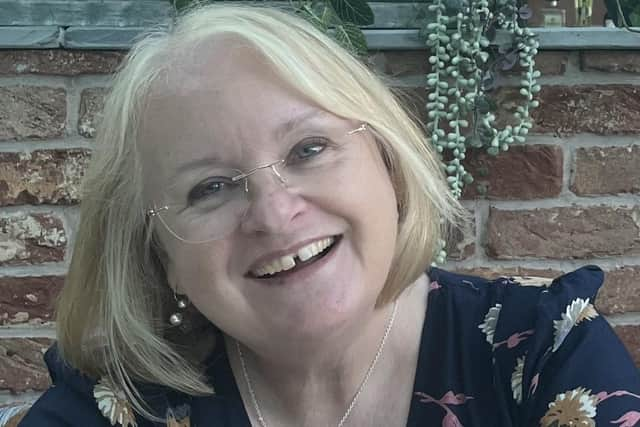
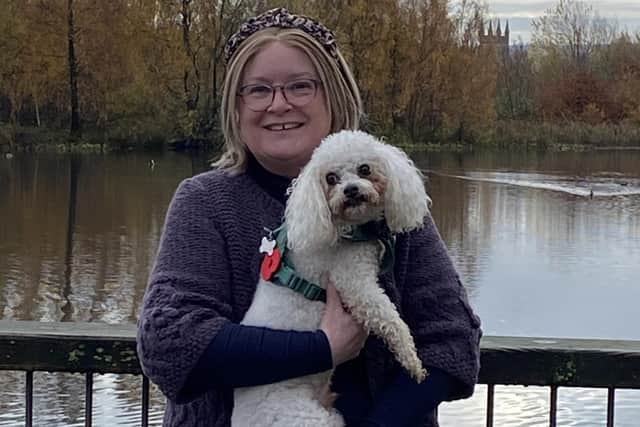
Carrol, 62, has volunteered at Macmillan for 16 years and was diagnosed with triple negative breast cancer after attending a routine mammogram which was followed by a letter through her door.

The letter, which emphasised she shouldn’t worry, instructed her to head to Edinburgh for a follow up appointment. Upon her arrival, she was told, “You know it’s cancer, right?”.
“Talk about a bolt out of the blue, we hadn’t done any additional tests, we hadn’t done any other mammograms or anything. It was just - ‘you know it’s cancer’. Of course I don’t, everything you told me was ‘don’t worry’!” she said.
Further mammograms and biopsies were carried out that day, and Carrol was instructed to come back in a week for her test results.
She questioned why she had to go to Edinburgh when Forth Valley Royal Hospital, which is more local to her, would be carrying out her treatment.
“A man you’re never going to see again, because you’re not going to be treated in Edinburgh, tells you the worst news you’ve ever heard in your life,” she said, reflecting on the moment she was given her test results.
When the next steps were explained to her, she was told that everything would “move very quickly” as the Scottish government has targets to hit in their cancer care delivery.
As part of the government’s Cancer Strategy for Scotland 2023-2033 plan, which aims to improve cancer survival and provide patients with “excellent, equitably accessible care”, 95 per cent of eligible patients should not wait more than 31 days from the decision to treat the cancer to starting treatment. A 62-day standard between referrals of urgent suspicions of cancer to treatment is also outlined in the government plan.
Carrol said every target was missed during her treatment.
She said: “They didn’t move fast at all. Don’t get cancer at the start of December, because people go on holiday and apparently the world grinds to a halt because of Christmas. Cancer doesn’t grind to a halt because of Christmas.”
She first spoke with a surgeon who said he would see her in six months, something she found “bizarre” as she was yet to meet with an oncologist. She questioned why she wasn’t meeting with the person that everyone kept telling her she needed to see, and she didn’t see an oncologist for another three weeks.
Things didn’t get easier for Carrol - her cancer was suspected to be Stage 2, then Stage 3, before she was informed it could be Stage 4 but it would be three weeks before testing could be done to confirm.
She said: “You’ve just told me I could have stage 4 cancer and now you’re telling me I need to wait three weeks.
“I remember going away and thinking, ‘I am lost, I don’t know what I’m doing’.”
It was then she turned to Macmillan for support, the charity she had spent 16 years volunteering at and helping other cancer patients.
Carrol spoke to an “amazing” cancer nurse at Macmillan, who helped her “find herself”.
“She helped me to understand that the person I needed in those hospital appointments and in that room with me was me, and I wasn’t there. She gave me all the tools to advocate for myself,” she said.
The support she received from Macmillan and her support network helped Carrol through her treatment, which was six months of chemotherapy.
“One of the things I would say to anyone when they get diagnosed is don’t wait until you need [support], just reach out now,” she said.
Her experience led her to the realisation that people going through cancer treatment have to “be selfish”.
“If there’s any point in your life where you need to be selfish, this is it. If you can’t do something, that’s alright. You can’t do it now, but in six months, you’ll be able to do it then, so be selfish and look after yourself,” she said.
Her experience has also strengthened her passion for advocating for better cancer care in Scotland.
“If I can do anything to help improve cancer care in Scotland, I am there. It was maybe one of the things that kept me going through my treatment - I could see what was wrong and I could see how easily it could be fixed,” she said.
After witnessing other patients in the oncology ward, Carrol decided she had to speak up about the level of care given to cancer patients.
Appointments to have bloods checked ahead of chemotherapy treatments never ran to time, she reflected.
“It became a longstanding joke in the hospital, you would go in and you’d say, ‘how late are they running today?’, and it’s easily an hour and a half,” Carrol said.
She believes that the oncology department at Forth Valley Royal Hospital has the right idea, but is executing it in the wrong way.
“I will shout loud until something changes,” she said.
An NHS Forth Valley spokesperson said: “Changes have made to local breast clinics to reduce waiting times, and these arrangements are working well. However, this is a large, very busy clinic and occasionally appointments times may run over to ensure staff are able meet the needs of any patients attending who may require extra time.
“Staff within the Oncology Unit are part of a multidisciplinary team which works closely with colleagues in other specialties to coordinate care and treatment.
“In addition, we offer one-stop breast clinics which enable patients with a breast lump to have an outpatient consultation, mammogram and ultrasound scans performed during the same visit along with a biopsy, if required.
“The team also welcomes feedback from patients to further develop and improve local services and this can be shared with the team direct or by emailing our Patient Relations team at [email protected].”
Health Secretary Angela Constance said: “The NHS is treating more patients in Scotland with cancer compared to pre-pandemic and ten years ago with the median wait time for treatment just two days – the joint lowest on record.
“We know, however, we must do more to ensure more people are treated within the 62-day standard, which has been impacted by diagnostic pressures and an increasing number of referrals.
“The most recent cancer mortality data shows risk of dying from cancer in Scotland is at the lowest rate on record for both men and women, falling by 12.1 per cent from 2015 to 2024. This encouraging trend reflects earlier detection, more effective treatments and our continued investment in cancer services.”
Anthony Cunliffe, lead medical adviser at Macmillan Cancer Support, said: “Cancer can be one of the toughest challenges a person will ever face, but finding cancer early can make a real difference. If you notice a lump or any other change to your breast or armpit, it’s important to contact your healthcare team and get it checked - even if talking about symptoms feels difficult.
“At Macmillan, we do whatever it takes to help everyone living with cancer. Whatever your question or need, big or small, our specially trained colleagues are here to provide reassurance, information, and support to help you right now through our Support Line, Online Community and website.”